


“Wait, how did we spend that much?”
If the question somehow seems familiar to you, you’re not alone. For many SaaS companies, pay-per-click (PPC) campaigns can be both a growth engine and a money drain. Each click can cost anywhere from $10 to $50, and if your targeting or creative is even slightly off, that budget can vanish fast.
Yet, when done right, PPC remains one of the most powerful ways to build a qualified pipeline and accelerate customer acquisition faster than any organic channel ever could.
So, in this article, you’ll learn the five most common PPC strategy mistakes SaaS teams make, and more importantly, how to fix them.
Why PPC Still Matters for SaaS Growth
Although the rise of AI in ads is reshaping digital marketing, PPC still holds its ground as one of the most effective growth drivers for SaaS. It’s one of the few levers that can generate immediate pipeline visibility. But with clicks often priced between $10 and $50 in competitive B2B markets, especially for software categories like CRM, cybersecurity, and project management, every impression counts.
So why do SaaS teams still invest? Because PPC delivers something no other channel can: speed and precision.
Search engine optimization can take months to build credibility, while a well-structured PPC system can test messaging, validate offers, and attract ready-to-buy audiences within days. That makes it indispensable for early-stage SaaS startups looking to prove demand, as well as mature SaaS companies scaling their pipeline predictably.
The challenge lies in the nature of SaaS buying cycles. B2B software decisions rarely happen after one click. Moreover, statistics show that the average B2B deal involves 6-10 decision-makers and can take up to six months or longer. This means that besides capturing clicks, a single PPC campaign must also nurture awareness, engagement, and conversion.
Smart PPC isn’t about traffic. It’s about building a strategic funnel that mirrors your buyer journey: attracting top-of-funnel interest, engaging evaluators in the middle, and driving demos or trials at the bottom. When every stage is aligned and measured, PPC stops being a cost center and becomes a predictable growth engine.
💡Recommended Reading
Mistake #2: Ignoring the Funnel
Many SaaS teams treat PPC like a sprint when it’s really a marathon. Launching one-size-fits-all campaigns and expecting the same message to convert cold leads and ready buyers alike won’t take you far. All you get is high click-through rates (CTRs), low conversions, and a lot of wasted budget.
We’ve seen this countless times. Our campaign manager from a B2B SaaS analytics company says:
“Our client was sending everyone to the same demo page, whether they’d never heard of them or already downloaded three guides. It worked for no one.”
That’s the classic symptom of ignoring the marketing funnel. SaaS buying journeys are long and non-linear, and every stage, from awareness to decision, demands a tailored approach.
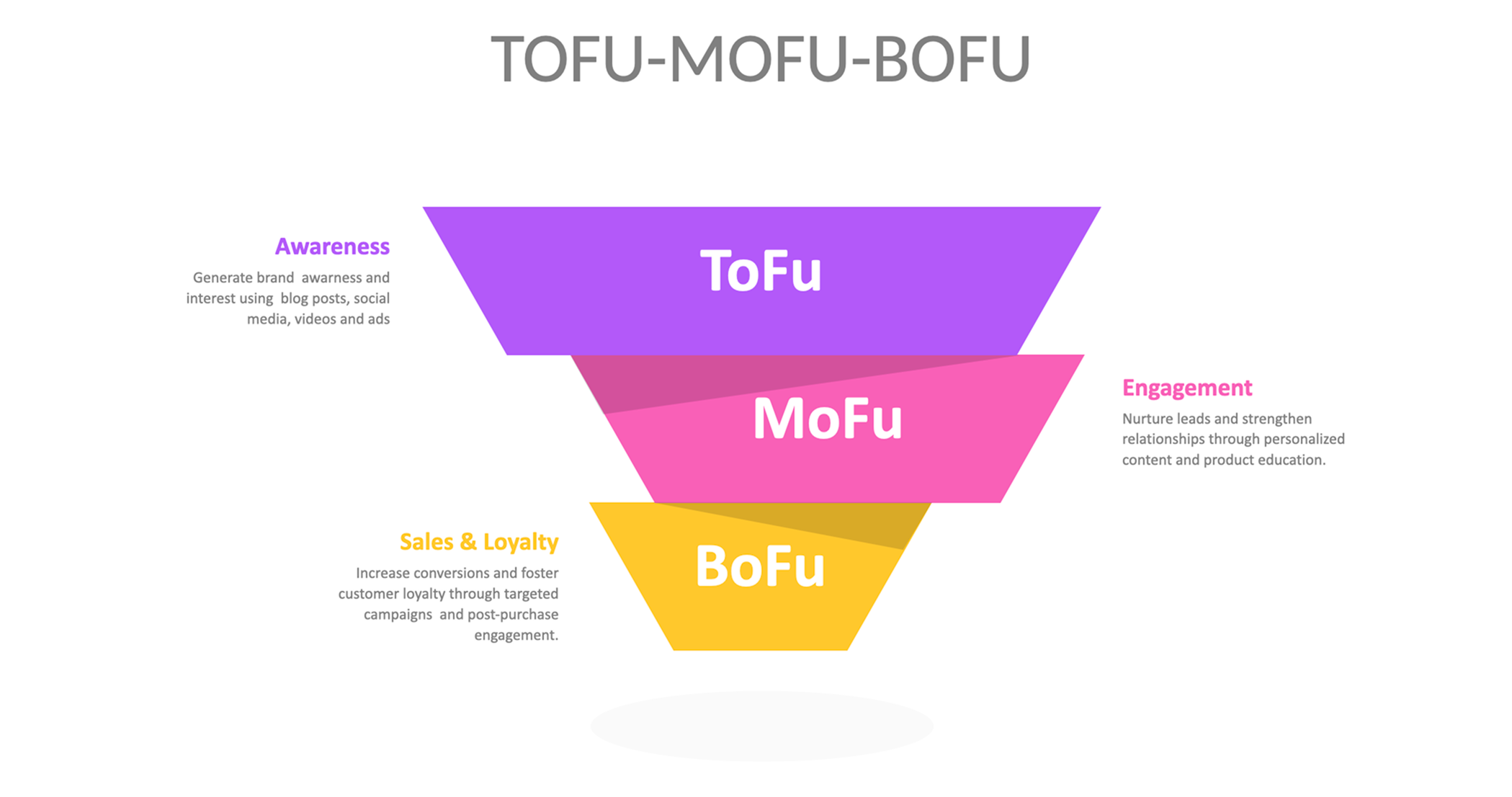
At the top of the funnel (TOFU), prospects are still defining their problem. They’re not ready for a demo; they’re looking for insights. That’s where value-driven content (guides, benchmarks, or industry reports) works best.
The middle of the funnel (MOFU) is about consideration. Here, buyers already understand their pain points and are comparing solutions. Ads promoting webinars, case studies, or feature overviews build trust and help move them closer to a decision.
Finally, the bottom of the funnel (BOFU) is where high-intent actions happen: demos, trials, and pricing requests. At this stage, clarity and urgency matter more than education.
✅ Fix: Match message and CTA to buyer readiness.
Audit your ad structure by funnel stage. Map every campaign to a specific buyer intent: educate, engage, or convert. For instance:
TOFU: “Get the 2025 SaaS Benchmark Report”
MOFU: “See how [client name] cut churn by 30% with automation.”
BOFU: “Book a 15-minute demo. See ROI in real time.”
Set up sequential retargeting to move users naturally down the funnel. Someone who downloaded your report last week shouldn’t see the same ad again. They should see your demo invite next.
When PPC mirrors your funnel, every click has purpose. It’s not just about who sees your ad, but when and why they see it.
Mistake #4: Landing Pages That Don’t Convert
Spending hundreds on high-intent clicks only to send users to your homepage is like inviting them to a conference with no signs or agenda. Many SaaS teams overlook this simple truth: your landing page is the closer.
One of our PPC strategists once shared,
“We had a client who set a $30 CPC campaign leading to the homepage. People clicked, scrolled, and left. Zero conversions. Not because the offer was weak, but because the page didn’t tell them what to do.”
A homepage tries to serve everyone: investors, partners, and job seekers. But landing pages speak directly to the person clicking that ad. It focuses on one message, one offer, and one action.
Strong PPC landing pages always include:
Message match: The headline mirrors the ad promise.
One clear CTA: “Book a demo” or “Start free trial.”
Trust signals: Client logos, G2 badges, testimonials, or short ROI proof.
✅ Fix: Simplify pages. One goal, one conversion path.
Each ad campaign deserves its own tailored landing page. When every click lands on a page that delivers exactly what was promised, conversions stop being accidental and start being predictable.
Mistake #5: Tracking the Wrong Metrics
A high CTR or low CPC may look good in a weekly report, but neither guarantees growth. Many SaaS teams fall into the trap of optimizing for vanity metrics while missing what truly matters, pipeline and ROI visibility. Our SaaS marketing manager once put it bluntly:“A client celebrated a 5% CTR increase… until sales told them none of those leads ever booked a call.”
That’s the disconnect between ad platforms and real outcomes. PPC doesn’t end at the click, but at customer acquisition.
Instead of focusing on click-throughs and lead volume, track:
Customer Acquisition Cost (CAC)
Pipeline influenced by ads
Lead-to-demo and demo-to-close rates
Lifetime Value (LTV)
✅ Fix: Build a full-funnel attribution view.
Integrate Google Ads and LinkedIn Ads with your CRM (like HubSpot or Salesforce). Track every conversion from click to customer. Use this visibility to pause campaigns that generate cheap leads but low sales impact.
When your SaaS marketing metrics shift from surface-level engagement to revenue accountability, PPC becomes a growth function, not a guessing game.
Final Takeaway
PPC is all about driving traffic and turning its intent into impact. When structure, targeting, and creativity work together, SaaS companies stop guessing and start scaling. A well-built PPC system doesn’t just fill the funnel; it fuels measurable, profitable growth.
Ready to Scale Your SaaS with PPC?
Let’s make your clicks count!
Book a free strategy call with WeScale and get a clear roadmap to lower costs, stronger conversions, and campaigns that drive real revenue, not just impressions.


